Riding the Medellín Metrocable: A Real Guide to the Cable Cars (2026)
Updated August 202610 min readBy Mike Chartrand
The Metrocable is real public transit that also happens to be one of the best views in the city, an aerial ride over the hillside comunas that most cities would never have built this way. Here's which lines are worth riding, what it actually costs, how it connects to the Ayacucho tranvía, and where a guided tour is worth paying for.
Specific question while you read? Ask Catalina, the Medellín Guide concierge.Chat with Catalina ›
What the Metrocable actually is
Medellín built its metro through the flat valley floor in the 1990s, then hit an obvious problem: hundreds of thousands of people live on the steep hillsides above it, in comunas that buses can barely reach and that used to take 45 minutes to walk down from. Instead of ignoring that population, the city ran a system of cable cars, the same technology used at ski resorts, straight up the hillsides and folded it into the metro fare system. The first line opened in 2004. It was one of the first urban cable car systems built specifically as everyday public transit rather than a tourist attraction, and cities across Latin America have copied the model since.
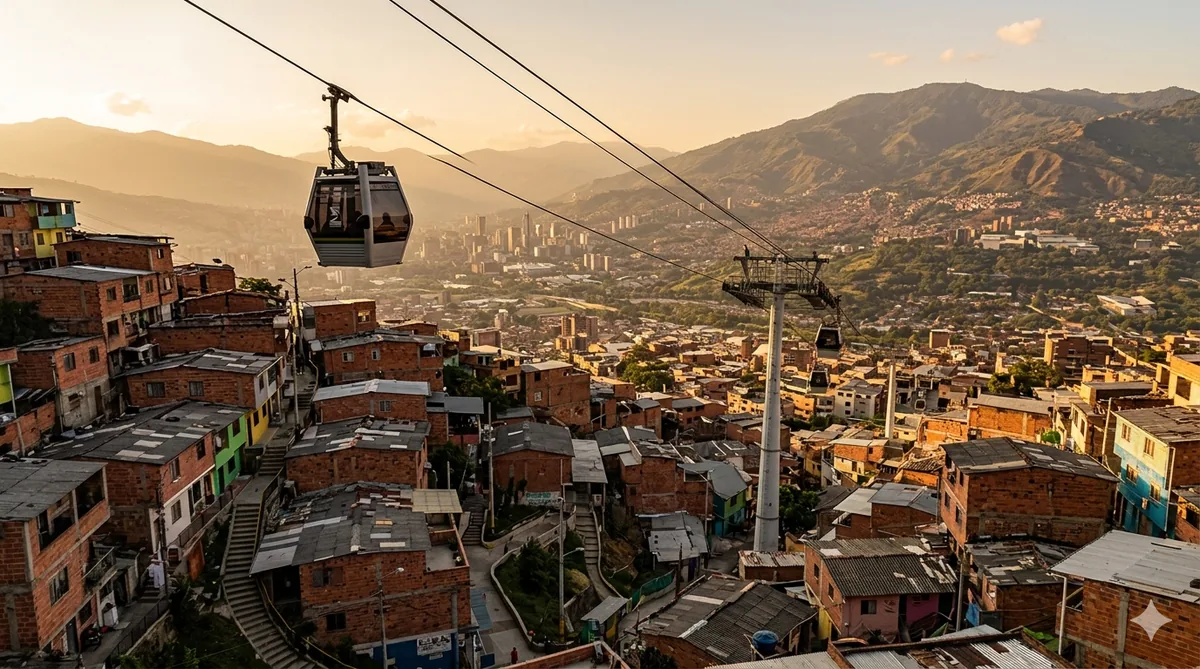
That's the important thing to hold onto before you ride: this is not an amusement park attraction built for visitors. It's how tens of thousands of residents get to work, school, and home every single day. The fact that it's also a spectacular way to see the city, gliding silently over rooftops, laundry lines, and steep concrete stairways with the whole Aburrá Valley opening up below you, is a genuine bonus, not the point.
The system has also become one of the most-cited examples worldwide of what urban planners call "social urbanism," using public infrastructure investment specifically in the poorest, most underserved neighborhoods rather than routing money toward wealthier areas first. Delegations from other Latin American and international cities regularly visit Medellín to study the model, and several cities, including Bogotá, Rio de Janeiro, and La Paz, have since built their own urban cable car systems inspired directly by it.
The lines, and which ones are worth riding
Medellín's Metrocable network has grown into several lines, lettered rather than numbered, each connecting a metro station to a hillside comuna. Not all of them are equally interesting for a visitor with limited time.
Line K (Acevedo to Santo Domingo Savio, Comuna 1 and 2): the original line and still the classic ride. It's short, roughly 15 minutes, and the climb out of the valley into the dense hillside barrios is dramatic almost immediately. Santo Domingo station connects onward to Line L, a separate, higher-fare gondola that runs out to Parque Arví, a nature reserve above the city, a popular half-day add-on.
Line J (San Javier to La Aurora, Comuna 13): this is the line most visitors actually ride, because San Javier station is also the jumping-off point for the Comuna 13 graffiti tour and escalators. Riding Line J to the end of the line at La Aurora gets you above the comuna entirely, with views back down over the murals and rooftops, and La Aurora is also a common launch point for tandem paragliding flights over the west side of the city.
Line H (Oriente to Las Torres, opened 2016): reaches comunas further east, La Sierra, Villa Turbay, San Antonio de las Torres. Less touristed, genuinely local, worth it if you want to see the system without the crowd rather than for a specific landmark at the end.
Line P and other newer lines: the network keeps expanding into additional hillside comunas. These are functionally identical rides, worth checking if one happens to line up with wherever you're already headed, not worth a special trip on their own.
If you only have time for one, make it Line K to Santo Domingo for the classic experience or Line J to Comuna 13 if you're already planning to see the graffiti and escalators, since it lets you combine both in one outing.
The Ayacucho tranvía connection
On the east side of the city, the system connects to something different: the Tranvía de Ayacucho, an electric street tram (not a cable car) that runs along Avenida Ayacucho through the San Antonio and Buenos Aires areas, then feeds into two more Metrocable lines (H and M) that climb into the eastern hillside comunas from its far end. The tram itself is a pleasant, low-key ride through a part of the city most tourists never see, past murals near Buenos Aires station and older residential blocks, and it's fully integrated with the same fare as the metro and cable cars. It's a good add-on if you're curious about the east side of the city and want a change of pace from the cable cars, though it's not a must-do the way Line K or Line J are.
Fare and the Cívica card
The Metrocable, the metro, the Ayacucho tranvía, and the Metroplús bus system all run on one shared fare, paid with a rechargeable Cívica card. As of early 2026, the card itself costs about COP 10,900 as a one-time purchase (about USD 2.70 at COP 4,000 to the dollar), and a standard single ride is around COP 3,820 to 4,400 (roughly USD 1) depending on your fare category, with the higher end applying to occasional or tourist riders. That single fare covers your ride plus any transfers within the integrated system, metro to cable car to tranvía, with no extra charge, as long as you don't exit and re-enter.
One exception: Line L, the gondola from Santo Domingo out to Parque Arví, is not covered by the base fare. It charges its own separate ticket, roughly COP 13,700 (about USD 3.25) each direction, because it's run as a nature-reserve access line rather than core urban transit.
Buy or top up a Cívica card at any staffed metro station ticket window or self-service kiosk. Cash and, at most stations, card payment both work. You don't need to buy a new card each trip, top it up and reuse it for the rest of your stay.
It's transit, not a ride: etiquette that matters
Because this is genuinely how people commute, a few things matter more here than they would on a tourist gondola.
Boarding is fast. Cabins keep moving through the station at walking pace, they don't stop and wait. Step in confidently when it's your turn; station staff will help if you hesitate.
Peak hours are genuinely crowded. Weekday mornings (roughly 6 to 8 a.m.) and evenings (5 to 7 p.m.) are commuter rush hour, cabins fill with people heading to and from work. If you want space to take photos, go mid-morning or early afternoon on a weekday, or any time on a weekend.
Let people off first, then board. Standard transit courtesy, and it moves the line faster for everyone.
Keep bags close and phones secured. No different from any crowded transit system anywhere, but cabins are small and it's easy for a phone to slip out of a loose pocket while you're leaning toward the window for a photo.
Self-guided vs a guided tour
Riding the Metrocable on your own is simple and cheap, and plenty of people do exactly that: buy a Cívica card, pick a line, ride it. Where a guided tour earns its price is context and logistics, not access, since the cable cars themselves are open to everyone at the same fare.
A guided city tour built around the Metrocable typically bundles the cable car ride with a themed vehicle or van pickup, narration about the comunas you're passing over (what happened here, what's changed, what you're looking at), and often a stop at Comuna 13 or another neighborhood on the same outing, so you're not piecing together transfers and timing yourself. If that sounds like a better fit than figuring out lines and stations solo, this Medellín tour with themed vehicles, the tranvía, and the Metrocable covers the tram and cable car ride plus city sightseeing in one booking, with pickup handled for you.
Photo via Viator
Either way works. Self-guided saves money and lets you set your own pace; a booked tour saves you the planning and adds narration you won't get riding solo.
Planning your ride
What to bring: A charged phone or camera for photos through the (often slightly scratched) cabin windows, small bills in case a station kiosk is cash-only, and comfortable shoes if you're planning to combine a Metrocable ride with walking Comuna 13's escalators the same day.
Best time to go: Weekday late morning to early afternoon, or weekends, for lighter cabins and easier photos. Clear mornings generally give the best visibility across the valley before afternoon haze or rain rolls in.
Combine it with: Line J to San Javier pairs naturally with the Comuna 13 graffiti tour, since San Javier station is the starting point for both. Line K to Santo Domingo pairs with a half-day trip onward to Parque Arví via the connecting Line L gondola.
It runs in the rain. The system operates in most weather, including Medellín's frequent afternoon showers, so don't assume a cloudy forecast rules it out. Heavy electrical storms occasionally cause brief suspensions for safety, which is one more reason a weekday morning ride beats a last-minute plan on your final afternoon in the city.
FAQ
Is the Metrocable safe for tourists?
Yes. It's operated by the same public metro system used by residents citywide, with the same security presence and standards as the rest of the network. Normal city awareness applies (watch your belongings in a crowded cabin) but there's nothing specific to the cable cars that should worry a visitor.
How much does it cost?
A single integrated fare covering metro, Metrocable, and the Ayacucho tranvía runs about COP 3,820 to 4,400 (roughly USD 1) as of early 2026, plus a one-time COP 10,900 (about USD 2.70) for the reusable Cívica card. Line L to Parque Arví charges its own separate fare, about COP 13,700 (USD 3.25) each way.
Which line should I ride if I only have time for one?
Line K to Santo Domingo for the classic first-generation experience, or Line J to San Javier and La Aurora if you're also visiting Comuna 13, since they share a starting station.
Do I need a guided tour, or can I ride it myself?
You can absolutely ride it yourself for the cost of a Cívica card and a few minutes figuring out the map at any metro station. A guided tour adds narration, a themed vehicle or van for the parts between stations, and no planning on your part, useful if you'd rather sit back than navigate transfers.
Can I combine it with Parque Arví or Comuna 13 in one day?
Yes, both are common pairings. San Javier station (Line J) connects directly to the Comuna 13 escalators. Santo Domingo station (end of Line K) connects to Line L, which runs onward to Parque Arví, a nature reserve worth a half day on its own.
Catalina is our concierge. Ask her about visas, neighborhoods, healthcare, prices, anything Medellín. She answers in chat or WhatsApp, English or Spanish, free.
¿Una pregunta específica mientras lees? Pregúntale a Catalina, la conserje de Medellín Guide.Chatea con Catalina ›
Qué es realmente el Metrocable
Medellín construyó su metro por el valle plano en los años noventa, y luego se topó con un problema evidente: cientos de miles de personas viven en las laderas empinadas por encima, en comunas a las que los buses apenas llegan y que antes tomaban 45 minutos bajar a pie. En lugar de ignorar a esa población, la ciudad instaló un sistema de teleféricos, la misma tecnología usada en estaciones de esquí, directamente hacia las laderas y lo integró al sistema de tarifas del metro. La primera línea abrió en 2004. Fue uno de los primeros sistemas de teleférico urbano construidos específicamente como transporte cotidiano y no como atracción turística, y ciudades de toda Latinoamérica han copiado el modelo desde entonces.
Eso es lo importante de tener presente antes de montarte: esto no es una atracción de parque temático construida para visitantes. Es cómo decenas de miles de residentes llegan al trabajo, al colegio y a casa todos los días. El hecho de que también sea una forma espectacular de ver la ciudad, deslizándote en silencio sobre techos, ropa tendida y escaleras empinadas de concreto con todo el Valle de Aburrá abriéndose debajo, es un bono real, no el punto principal.
El sistema también se ha convertido en uno de los ejemplos más citados a nivel mundial de lo que los urbanistas llaman "urbanismo social", invertir en infraestructura pública específicamente en los barrios más pobres y desatendidos en lugar de dirigir el dinero primero hacia zonas más adineradas. Delegaciones de otras ciudades latinoamericanas e internacionales visitan Medellín regularmente para estudiar el modelo, y varias ciudades, incluyendo Bogotá, Río de Janeiro y La Paz, han construido desde entonces sus propios sistemas de teleférico urbano inspirados directamente en este.
Las líneas, y cuáles valen la pena
La red de Metrocable de Medellín ha crecido hasta tener varias líneas, identificadas con letras en lugar de números, cada una conectando una estación del metro con una comuna en la ladera. No todas son igual de interesantes para un visitante con tiempo limitado.
Línea K (Acevedo a Santo Domingo Savio, Comuna 1 y 2): la línea original y todavía el paseo clásico. Es corta, unos 15 minutos, y la subida desde el valle hacia los barrios densos de la ladera es dramática casi de inmediato. La estación Santo Domingo conecta con la Línea L, un teleférico distinto y de tarifa aparte que va hasta el Parque Arví, una reserva natural sobre la ciudad, un complemento popular de medio día.
Línea J (San Javier a La Aurora, Comuna 13): esta es la línea que más visitantes recorren en realidad, porque la estación San Javier también es el punto de partida del tour de grafiti y las escaleras de la Comuna 13. Tomar la Línea J hasta el final en La Aurora te lleva por encima de la comuna entera, con vistas hacia abajo sobre los murales y techos, y La Aurora también es un punto de lanzamiento común para vuelos de parapente en tándem sobre el occidente de la ciudad.
Línea H (Oriente a Las Torres, abierta en 2016): llega a comunas más al oriente, La Sierra, Villa Turbay, San Antonio de las Torres. Menos turística, genuinamente local, vale la pena si quieres ver el sistema sin las multitudes en lugar de por un punto de interés específico al final.
Línea P y otras líneas más nuevas: la red sigue expandiéndose hacia más comunas de ladera. Son paseos funcionalmente idénticos, vale la pena revisarlas si coinciden con algo que ya tenías planeado, no ameritan un viaje especial por sí solas.
Si solo tienes tiempo para una, que sea la Línea K hasta Santo Domingo para la experiencia clásica, o la Línea J hasta la Comuna 13 si ya planeas ver los grafitis y las escaleras, ya que te permite combinar ambas en una sola salida.
La conexión con el tranvía de Ayacucho
En el oriente de la ciudad, el sistema conecta con algo distinto: el Tranvía de Ayacucho, un tranvía eléctrico (no un teleférico) que recorre la Avenida Ayacucho por las zonas de San Antonio y Buenos Aires, y luego se conecta con dos líneas más de Metrocable (H y M) que suben hacia las comunas orientales desde su extremo final. El tranvía en sí es un paseo agradable y tranquilo por una parte de la ciudad que la mayoría de turistas nunca ve, pasando cerca de murales junto a la estación Buenos Aires y de manzanas residenciales más antiguas, y está totalmente integrado con la misma tarifa del metro y los teleféricos. Es un buen complemento si te interesa el oriente de la ciudad y quieres un cambio de ritmo frente a los teleféricos, aunque no es imprescindible como sí lo son la Línea K o la Línea J.
Tarifa y la tarjeta Cívica
El Metrocable, el metro, el tranvía de Ayacucho y el sistema de buses Metroplús funcionan con una sola tarifa compartida, pagada con una tarjeta recargable llamada Cívica. A comienzos de 2026, la tarjeta en sí cuesta cerca de COP 10,900 como compra única (unos USD 2.70 a una tasa de COP 4,000 por dólar), y un pasaje sencillo estándar ronda los COP 3,820 a 4,400 (aproximadamente USD 1) según tu categoría de tarifa, con el valor más alto aplicando a viajeros ocasionales o turistas. Esa tarifa sencilla cubre tu viaje más cualquier transbordo dentro del sistema integrado, metro a teleférico a tranvía, sin cargo adicional, siempre que no salgas y vuelvas a entrar.
Una excepción: La Línea L, el teleférico de Santo Domingo hacia el Parque Arví, no está cubierta por la tarifa base. Cobra su propio pasaje aparte, cerca de COP 13,700 (unos USD 3.25) por trayecto, porque funciona como acceso a una reserva natural más que como transporte urbano central.
Compra o recarga una tarjeta Cívica en cualquier ventanilla de estación del metro o en los quioscos de autoservicio. Efectivo y, en la mayoría de estaciones, pago con tarjeta funcionan. No necesitas comprar una tarjeta nueva cada viaje, recárgala y reúsala el resto de tu estadía.
Es transporte, no una atracción: etiqueta que importa
Como esto es realmente cómo la gente se moviliza a diario, algunas cosas importan más aquí que en un teleférico puramente turístico.
El abordaje es rápido. Las cabinas siguen moviéndose por la estación a paso de caminata, no se detienen a esperar. Entra con confianza cuando sea tu turno; el personal de la estación te ayuda si dudas.
Las horas pico son realmente concurridas. Las mañanas entre semana (aproximadamente 6 a 8 a.m.) y las tardes (5 a 7 p.m.) son hora pico de viajeros yendo y viniendo del trabajo. Si quieres espacio para tomar fotos, ve a media mañana o temprano en la tarde entre semana, o cualquier hora el fin de semana.
Deja bajar antes de subir. Cortesía estándar de transporte público, y hace que la fila avance más rápido para todos.
Mantén las bolsas cerca y el celular seguro. No es diferente de cualquier sistema de transporte concurrido en el mundo, pero las cabinas son pequeñas y es fácil que un celular se resbale de un bolsillo suelto mientras te acercas a la ventana para una foto.
Por tu cuenta o con tour guiado
Montar en el Metrocable por tu cuenta es simple y económico, y mucha gente hace exactamente eso: compra una tarjeta Cívica, elige una línea, súbete. Donde un tour guiado justifica su precio es en contexto y logística, no en acceso, ya que los teleféricos están abiertos a todos con la misma tarifa.
Un tour guiado de ciudad construido alrededor del Metrocable típicamente combina el paseo en teleférico con un vehículo temático o furgoneta de recogida, narración sobre las comunas que sobrevuelas (qué pasó aquí, qué ha cambiado, qué estás viendo), y a menudo una parada en la Comuna 13 u otro barrio en la misma salida, para que no tengas que armar transbordos y horarios tú mismo. Si eso suena mejor que resolver líneas y estaciones por tu cuenta, este tour de Medellín con vehículos temáticos, tranvía y Metrocable incluye el paseo en tranvía y teleférico más recorrido por la ciudad en una sola reserva, con recogida incluida.
Photo via Viator
Cualquiera de las dos opciones funciona. Por tu cuenta ahorras dinero y marcas tu propio ritmo; un tour reservado te ahorra la planeación y suma narración que no tendrías yendo solo.
Planea tu recorrido
Qué llevar: Un celular o cámara cargados para fotos a través de las ventanas de la cabina (a veces algo rayadas), billetes pequeños por si algún quiosco de estación solo acepta efectivo, y zapatos cómodos si planeas combinar un paseo en Metrocable con caminar las escaleras de la Comuna 13 el mismo día.
Mejor hora para ir: Media mañana a inicio de la tarde entre semana, o fines de semana, para cabinas menos llenas y fotos más fáciles. Las mañanas despejadas suelen dar la mejor visibilidad sobre el valle antes de la neblina o lluvia de la tarde.
Combínalo con: La Línea J hasta San Javier combina naturalmente con el tour de grafiti de la Comuna 13, ya que la estación San Javier es el punto de partida de ambos. La Línea K hasta Santo Domingo combina con una salida de medio día hacia el Parque Arví vía la Línea L de conexión.
Funciona bajo lluvia. El sistema opera en la mayoría de condiciones climáticas, incluyendo los aguaceros frecuentes de la tarde en Medellín, así que no asumas que un pronóstico nublado lo descarta. Tormentas eléctricas fuertes ocasionalmente causan suspensiones breves por seguridad, una razón más para preferir un paseo entre semana en la mañana antes que un plan de último momento en tu última tarde en la ciudad.
Preguntas frecuentes
¿Es seguro el Metrocable para turistas?
Sí. Lo opera el mismo sistema público de metro que usan los residentes en toda la ciudad, con la misma presencia de seguridad y estándares que el resto de la red. Aplica la precaución normal de ciudad (cuida tus pertenencias en una cabina llena) pero no hay nada específico de los teleféricos que deba preocupar a un visitante.
¿Cuánto cuesta?
Una tarifa integrada sencilla que cubre metro, Metrocable y el tranvía de Ayacucho ronda los COP 3,820 a 4,400 (aproximadamente USD 1) a comienzos de 2026, más un pago único de COP 10,900 (unos USD 2.70) por la tarjeta Cívica reutilizable. La Línea L hacia el Parque Arví cobra su propia tarifa aparte, unos COP 13,700 (USD 3.25) por trayecto.
¿Qué línea debo tomar si solo tengo tiempo para una?
La Línea K hasta Santo Domingo para la experiencia clásica de primera generación, o la Línea J hasta San Javier y La Aurora si también vas a visitar la Comuna 13, ya que comparten estación de partida.
¿Necesito un tour guiado, o puedo ir por mi cuenta?
Puedes ir perfectamente por tu cuenta por el costo de una tarjeta Cívica y unos minutos entendiendo el mapa en cualquier estación del metro. Un tour guiado suma narración, un vehículo temático o furgoneta para los tramos entre estaciones, y nada de planeación de tu parte, útil si prefieres relajarte en lugar de navegar transbordos.
¿Puedo combinarlo con el Parque Arví o la Comuna 13 en un solo día?
Sí, ambas combinaciones son comunes. La estación San Javier (Línea J) conecta directamente con las escaleras de la Comuna 13. La estación Santo Domingo (final de la Línea K) conecta con la Línea L, que sigue hasta el Parque Arví, una reserva natural que vale medio día por sí sola.
Catalina es nuestra conserje. Pregúntale sobre visas, barrios, salud, precios, cualquier cosa de Medellín. Ella responde en chat o WhatsApp, inglés o español, gratis.
Get Medellín in your inboxRecibe Medellín en tu correo
One short Saturday email. New guides, what's on this week, and the things worth knowing. No noise.Un correo corto cada sábado. Nuevas guías, qué hay esta semana, y lo que vale la pena saber. Sin ruido.